
In today’s fast-paced digital world, mobile connectivity is not just a convenience — it is a necessity. From banking transactions and OTP verifications to social media accounts and government services, almost everything is tied to your mobile number. This makes your SIM card one of the most important personal assets you own.
But here is the problem: many Pakistanis do not know how many SIM cards are currently registered in their name. Others discover — often too late — that fraudsters have used their CNIC (Computerized National Identity Card) to register SIM cards without their knowledge or consent. This can lead to serious privacy violations, financial fraud, and even criminal misuse.
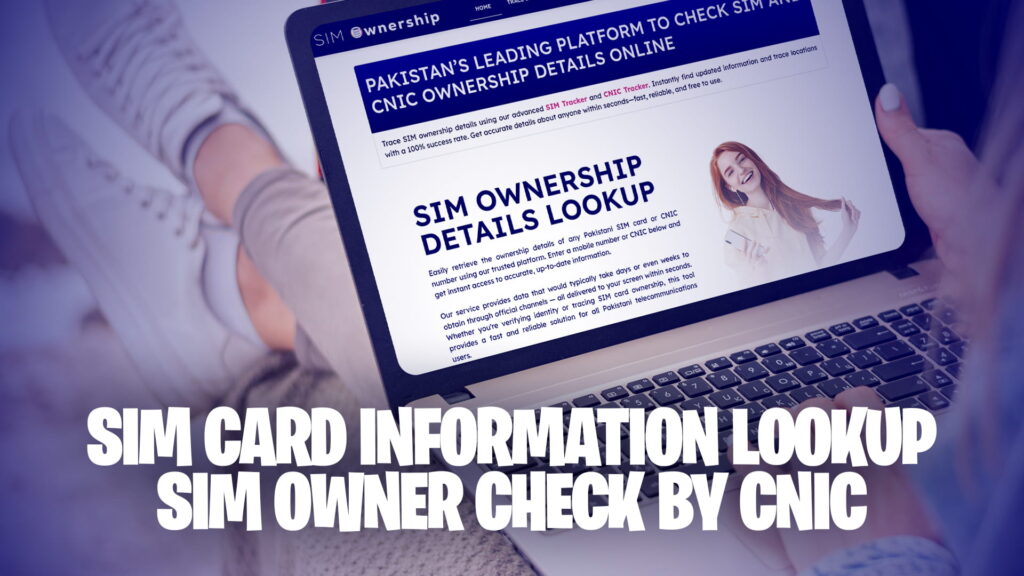
That is where SIM Ownership steps in. As Pakistan’s leading platform for SIM and CNIC ownership checks, SIM Ownership provides every citizen with the tools they need to verify, monitor, and protect their mobile identity. Built in compliance with PTA (Pakistan Telecommunication Authority) guidelines, SIM Ownership offers a fast, reliable, and secure way to check SIM card information online — at any time, from any device.
This comprehensive guide will walk you through everything you need to know about SIM card information lookup and SIM owner check by CNIC in Pakistan. Whether you are a regular user, a parent, a business owner, or someone who has suspected identity fraud, this article is designed for you.
What Is a SIM Owner Check?
A SIM owner check is the process of verifying which individual a specific SIM card is registered to, or alternatively, checking how many SIM cards are registered under a particular CNIC number. In Pakistan, every SIM card is required by law to be registered with a valid CNIC under the PTA’s Biometric Verification System (BVS).
When you perform a SIM owner check, you are essentially looking up the official database to confirm the ownership details of a SIM card. This is useful for a wide range of purposes, including personal security checks, parental monitoring, legal verifications, and fraud prevention.
SIM Ownership makes this process simple, fast, and accessible to every citizen of Pakistan. You do not need to visit a telecom franchise or fill out lengthy forms. All you need is a valid CNIC number and an internet-connected device.
What Is CNIC and Why Is It Connected to Your SIM?
The Computerized National Identity Card (CNIC) is the official identification document issued by NADRA (National Database and Registration Authority) to all Pakistani citizens aged 18 and above. It contains your personal details, biometric data, and a unique 13-digit identification number.
Under PTA regulations, all SIM cards in Pakistan must be registered using a valid CNIC through biometric verification. This means that when you buy a new SIM card, your thumbprint is scanned, and the SIM is officially linked to your CNIC in the national database. This system was introduced to reduce fraud, prevent SIM-based crimes, and ensure accountability in the use of mobile networks.
However, this system has a loophole that has been exploited by criminals. In some cases, people’s CNICs are used without their knowledge — often through forged documents or compromised biometric data — to register SIM cards. These fraudulently registered SIMs are then used for scams, blackmail, terrorism, drug trafficking, and other illegal activities.
This is exactly why checking your SIM card information through SIM Ownership is not just recommended — it is essential.
The Role of PTA in SIM Card Registration and Verification
The Pakistan Telecommunication Authority (PTA) is the federal regulatory body responsible for overseeing and regulating the country’s telecommunications sector. One of its key responsibilities is ensuring that all SIM cards in use across Pakistan’s telecom networks — including Jazz, Zong, Telenor, Ufone, and SCOM — are properly registered and linked to valid CNICs.
PTA has set a maximum limit on the number of SIM cards that can be registered per CNIC. Currently, a Pakistani citizen can have a maximum of five (5) SIM cards registered per CNIC across all networks. For some specific categories of users, this limit may vary.
PTA also provides an official method for citizens to check the number of SIM cards registered on their CNIC through an SMS-based service. However, SIM Ownership goes a step further by providing an advanced, online, user-friendly platform that not only shows how many SIMs are registered but also helps users take action if they find unauthorized registrations.
How Many SIM Cards Can Be Registered on One CNIC?
This is one of the most commonly asked questions in Pakistan. According to PTA regulations, a maximum of five (5) SIM cards can be registered on a single CNIC across all mobile network operators. Here is how the limit typically works:
- Jazz/Warid: Up to 5 SIMs per CNIC
- Zong: Up to 5 SIMs per CNIC
- Telenor: Up to 5 SIMs per CNIC
- Ufone: Up to 5 SIMs per CNIC
- SCOM: Up to 5 SIMs per CNIC
The total number of SIM cards registered across all networks combined under a single CNIC should not exceed the PTA-defined threshold. If you find more SIMs registered in your name than you actually own, it is a strong indicator that someone may have fraudulently registered SIM cards using your CNIC.
SIM Ownership allows you to check the total number and details of all SIM cards registered under your CNIC instantly, helping you identify any unauthorized registrations immediately.
Step-by-Step Guide: How to Check SIM Owner by CNIC Using SIM Ownership
Using SIM Ownership to perform a SIM owner check by CNIC is an incredibly straightforward process. You do not need any technical skills, and the entire process takes less than a minute. Here is a simple step-by-step guide:
Step 1: Visit SIM Ownership
Open your web browser on your mobile phone or computer and navigate to the SIM Ownership platform. The website is mobile-friendly and works smoothly on all devices.
Step 2: Locate the SIM or CNIC Lookup Tool
On the homepage, you will find the SIM/CNIC tracker tool. There are two options available:
- Check by CNIC: Enter your 13-digit CNIC number to see all SIM cards registered under it.
- Check by SIM Number: Enter a mobile number to find out who the registered owner is.
Step 3: Enter Your Details
Type in your CNIC number (without dashes) or the SIM number you want to check. Make sure the information you enter is accurate to get the correct results.
Step 4: Submit and View Results
Click the search or submit button. Within seconds, SIM Ownership will retrieve and display the relevant information from the database, including the number of SIMs registered, the network operators, and other relevant details.
Step 5: Take Action If Needed
If you find any SIM card registered in your name that you do not recognize, SIM Ownership provides guidance on how to report and block that SIM through the relevant channels, including PTA and the telecom operator.
What Information Can You Get From a SIM Card Lookup?
When you use SIM Ownership for a SIM card information lookup, you can retrieve several important pieces of data:
When checking by CNIC:
- Total number of SIM cards registered under the CNIC
- Names of mobile network operators (Jazz, Zong, Telenor, Ufone, SCOM)
- Active status of registered SIMs
- Whether any SIM is flagged or suspicious
When checking by mobile number:
- The registered owner’s name
- CNIC number linked to the SIM
- Network operator details
- Registration status
This information is invaluable for individuals, families, and businesses alike. It empowers citizens to take control of their mobile identity and ensures transparency in SIM card ownership.
Why Should You Check Your SIM Card Details?
There are many important reasons why every Pakistani citizen should regularly check their SIM card details through SIM Ownership. Here are the most critical ones:
1. Protecting Yourself From Identity Theft
Identity theft is a growing problem in Pakistan. Criminals obtain personal information, including CNIC details, and use them to register SIM cards under someone else’s name. These SIMs are then used for fraudulent activities that can be traced back to the innocent victim. By regularly checking your SIM ownership details, you can catch unauthorized registrations early and protect yourself.
2. Avoiding Legal Complications
Imagine being questioned by law enforcement for a crime you had no knowledge of, simply because a criminal used a SIM card registered in your name to carry out illegal activities. This scenario, unfortunately, happens in Pakistan. Checking and monitoring your CNIC-linked SIMs helps you avoid being implicated in crimes you did not commit.
3. Recovering Lost or Forgotten SIMs
Many people lose or forget about old SIM cards they purchased years ago. These dormant SIMs, if still active and registered under your CNIC, can be misused. A SIM card information lookup helps you identify and deactivate any SIMs you no longer need or use.
4. Parental Monitoring and Child Safety
Parents can use SIM Ownership to check whether their children have any unknown or unregistered SIM cards. In an age where online predators and cyberbullying are real threats, knowing which SIMs are registered under your family’s CNICs gives parents greater peace of mind and control.
5. Business and Corporate Security
For businesses that provide SIM cards to employees, SIM Ownership allows HR and security teams to monitor and verify the active SIM registrations of their workforce. This is particularly useful for organizations in sensitive sectors where mobile communication security is critical.
6. Verifying Newly Purchased SIM Cards
When you buy a new SIM card from a dealer, there is always a risk that the dealer may have registered the SIM under a different CNIC. Using SIM Ownership, you can immediately verify that the new SIM is registered in your name and not someone else’s.
Understanding Pakistan’s Telecom Landscape
Pakistan has one of the largest mobile subscriber bases in South Asia. With over 190 million mobile subscribers and a teledensity that continues to grow, the country’s telecom sector is both vibrant and complex. Here is a brief overview of the major mobile operators in Pakistan:
Jazz (Formerly Mobilink)
Jazz is Pakistan’s largest mobile network operator by subscriber count. It operates on GSM technology and offers a wide range of prepaid and postpaid services. Jazz merged with Warid Telecom in 2017 to become the dominant player in the market.
Zong (China Mobile Pakistan)
Zong is a subsidiary of China Mobile, the world’s largest mobile carrier by subscriber numbers. It is known for its extensive 4G/LTE network and strong data services across Pakistan.
Telenor Pakistan
Telenor is a Norwegian telecom giant’s Pakistani subsidiary. It has a strong presence in rural and semi-urban areas and is known for its innovative data packages and mobile financial services (Easypaisa).
Ufone (PTCL)
Ufone is the mobile subsidiary of PTCL (Pakistan Telecommunication Company Limited), which is partially owned by the government. It serves millions of subscribers and offers competitive packages.
SCOM (Special Communications Organization)
SCOM operates primarily in Azad Kashmir and Gilgit-Baltistan, providing mobile connectivity to citizens in these regions.
All of these networks fall under PTA’s regulatory framework, and SIM cards on all these networks can be checked through SIM Ownership.
What Is PTA’s SIM Information System (SIS)?
The SIM Information System (SIS) is PTA’s official database that records the registration details of all SIM cards in Pakistan. Every time a SIM card is purchased and activated through biometric verification, its details — including the owner’s CNIC, name, and network operator — are stored in this centralized system.
SIM Ownership’s CNIC tracker draws upon this system to provide users with real-time information about SIM registrations. This makes SIM Ownership one of the most reliable and accurate platforms for SIM card information lookup in the country.
PTA periodically updates this system to reflect changes such as new registrations, SIM blocks, deactivations, and transfers. By using SIM Ownership, you are getting access to the most current data available about your SIM cards and those registered under your CNIC.
How to Block an Unauthorized SIM Registered on Your CNIC
If you discover that there is a SIM card registered under your CNIC that you did not authorize, you should take immediate steps to block it. Here is what you can do:
Option 1: Contact PTA Directly
You can contact PTA’s customer support through their helpline or online complaint portal. Provide your CNIC details and the number of the SIM you want blocked, along with an explanation that it was registered without your knowledge.
Option 2: Visit the Telecom Operator’s Franchise
Go to the nearest franchise or service center of the network operator on which the unauthorized SIM is registered. Carry your original CNIC and explain the situation. The operator is legally obligated to investigate and take action.
Option 3: File a Written Complaint
You can file a formal written complaint with PTA by visiting their offices or using their official online complaint system. This creates a paper trail and escalates the matter to a formal investigation.
Option 4: Register a FIR With the Police
If you believe the unauthorized SIM has been used for criminal activities or fraud, you should file a First Information Report (FIR) with the local police station. This is particularly important if you have received threats, scam calls, or if you have been implicated in any crime.
SIM Ownership’s platform makes it easier to document your findings and provides guidance on the steps you need to take, making the process less stressful for the average citizen.
How SIM Ownership Is Different From PTA’s SMS-Based System
PTA offers an SMS-based method for checking SIM registrations. To use it, you send your CNIC number to 668 from any mobile network, and you receive an SMS reply showing the number of SIM cards registered under your CNIC. While this is a useful basic tool, it has several limitations.
SIM Ownership, on the other hand, offers a far more comprehensive and user-friendly experience. Here is how the two compare:
| Feature | PTA SMS Service | SIM Ownership |
|---|---|---|
| Method | SMS to 668 | Online platform |
| Device Required | Mobile phone only | Any device with internet |
| Information Provided | Number of SIMs only | Detailed SIM information |
| User Interface | Plain text SMS | Interactive web interface |
| Accessibility | Requires active SIM | Works even without a SIM |
| Additional Features | None | Guidance, reporting, tracking |
| Speed | Dependent on SMS delivery | Instant online results |
| Availability | 24/7 but SMS delay possible | 24/7 with real-time access |
For a basic check, PTA’s SMS service is adequate. But for a thorough, detailed, and action-oriented SIM card information lookup, SIM Ownership is the platform of choice for millions of Pakistanis.
Common Scams Involving Unauthorized SIM Cards in Pakistan
Understanding the most common types of SIM-related fraud can help you stay alert and take proactive steps. Here are the most prevalent scams in Pakistan that involve unauthorized SIM cards:
SIM Cloning
In SIM cloning, criminals create a duplicate of your SIM card, allowing them to receive calls and messages meant for you. This is particularly dangerous because it allows scammers to intercept OTPs (One-Time Passwords) used for banking and other sensitive applications.
SIM Swapping
SIM swapping involves convincing a telecom operator to transfer your mobile number to a new SIM card controlled by the fraudster. Once they have your number, they can reset passwords and gain access to your online accounts, including bank accounts and email.
Fraudulent SIM Registration
This involves criminals using stolen or forged CNIC documents to register new SIM cards in someone else’s name. These SIMs are then used for illegal communications, scams, and other criminal activities.
Prize Fraud Calls
Many fraud calls in Pakistan are made from SIM cards registered under other people’s CNICs. The scammer calls victims and claims they have won a lottery or prize, then requests money transfers to claim the prize. When the victim reports the scam, the SIM is traced back to an innocent person whose CNIC was misused.
Financial Fraud via Fake SIMs
Criminals use fraudulently registered SIMs to set up fake mobile wallet accounts (such as JazzCash and EasyPaisa) and conduct unauthorized transactions. The account trails lead back to the person whose CNIC was used.
Staying vigilant and regularly checking your SIM ownership details through SIM Ownership is the best defense against all these scams.
How SIM Ownership Protects Your Privacy
One of the most common concerns among users is whether providing their CNIC number on an online platform is safe. SIM Ownership takes privacy and data security extremely seriously. Here is how the platform ensures your information remains protected:
Encrypted Connections
All data exchanged on SIM Ownership is transmitted over secure, encrypted HTTPS connections. This means your CNIC and search data cannot be intercepted by third parties.
No Data Storage
SIM Ownership does not store your CNIC or search queries in any database that can be accessed or misused. Your lookups are processed in real-time and are not retained after your session ends.
PTA Compliance
SIM Ownership operates in full compliance with PTA’s regulations and data protection guidelines. The platform is not a rogue service — it is a trusted, legitimate tool built to empower citizens.
No Account Required
You do not need to create an account, provide an email address, or enter any personal information beyond the CNIC or SIM number you are checking. This minimizes the amount of data you share online.
These safeguards ensure that using SIM Ownership is as safe as it is effective.
SIM Ownership for Businesses: A Corporate Perspective
While SIM Ownership is primarily designed for individual users, it is increasingly being used by businesses and organizations across Pakistan for a variety of purposes.
Corporate SIM Management
Large companies often provide SIM cards to hundreds of employees. Managing these SIMs — ensuring they are registered correctly, identifying inactive numbers, and monitoring unauthorized use — can be a significant administrative challenge. SIM Ownership simplifies this process by allowing corporate administrators to quickly check the status of any SIM card.
HR and Employee Verification
During employee onboarding or background checks, HR teams can use SIM Ownership to verify that an employee’s contact number is genuinely registered in their name. This adds an extra layer of verification to the hiring process.
Legal and Compliance Teams
Legal departments in telecom, banking, and financial services companies can use SIM Ownership to verify SIM card details in cases involving disputes, fraud investigations, or regulatory compliance.
Law Enforcement and Investigations
Security agencies and private investigators can use SIM Ownership’s tools to track SIM ownership details as part of their investigative processes, provided they operate within the legal framework.
Tips to Keep Your CNIC and SIM Cards Safe
Prevention is always better than cure. Here are practical tips to protect your CNIC and SIM cards from misuse:
Never share your CNIC with untrusted individuals or businesses. Before giving your CNIC photocopy to anyone, make sure you know exactly why it is needed and who will be using it.
Write “For [Purpose] Only” on CNIC photocopies. When providing your CNIC for a specific purpose — such as a hotel check-in or bank account — write the purpose and date on the photocopy to prevent it from being used for other purposes.
Regularly check your SIM registrations. Make it a habit to check your SIM ownership details at least once every few months using SIM Ownership. This ensures that any unauthorized registrations are caught early.
Report lost CNICs immediately. If you lose your CNIC, report it to NADRA immediately and request a new one. Also notify PTA so that new SIM registrations under your old CNIC can be blocked.
Enable two-factor authentication on all accounts. Even if your SIM is cloned or swapped, having additional layers of security on your online accounts reduces the risk of unauthorized access.
Monitor your bank statements and mobile wallet activity. Regularly check your transaction history for any suspicious activity, which could indicate SIM-based financial fraud.
Be cautious of unsolicited calls and messages. If you receive unexpected messages about SIM registration or prize winnings, do not respond. These are often the opening moves of a scam.
The Legal Framework Around SIM Registration in Pakistan
SIM card registration and use in Pakistan is governed by several laws and regulations, including:
Pakistan Telecommunication (Re-organization) Act 1996: This is the primary legislation governing the telecom sector in Pakistan. It establishes PTA’s authority and sets out the regulatory framework for all telecom services, including SIM card management.
Prevention of Electronic Crimes Act (PECA) 2016: This law criminalizes a wide range of electronic offenses, including unauthorized access to communication systems, identity theft, and SIM-based fraud. Penalties under PECA can include heavy fines and imprisonment.
SIM Card Registration Regulations by PTA: PTA has issued specific regulations requiring biometric verification for all SIM card registrations. These regulations also define the maximum number of SIMs per CNIC and the process for blocking unauthorized SIMs.
NADRA Regulations on CNIC Misuse: NADRA has provisions for reporting and investigating cases where CNICs are misused for unauthorized purposes, including fraudulent SIM registration.
Understanding these legal frameworks empowers citizens to know their rights and take appropriate action when their mobile identity is compromised.
SIM Ownership and the Future of Digital Identity Verification in Pakistan
As Pakistan continues its digital transformation, the importance of mobile identity verification will only grow. Government services, financial inclusion initiatives, e-commerce platforms, and educational institutions are all increasingly relying on mobile numbers as the primary point of identity verification.
SIM Ownership is at the forefront of this digital shift, providing a reliable, accessible, and user-friendly platform for SIM card information lookup and CNIC-based tracking. As the platform evolves, users can expect even more advanced features, including:
Real-time SIM activity alerts: Notifications when a new SIM is registered under your CNIC.
Multi-CNIC family monitoring: Tools for families to monitor SIM registrations across multiple family members’ CNICs from a single dashboard.
Integration with digital identity wallets: As Pakistan develops digital ID systems, SIM Ownership aims to integrate with these platforms for seamless identity verification.
AI-powered fraud detection: Machine learning tools that can flag suspicious patterns in SIM registration data and alert users proactively.
Expanded coverage: Support for tracking SIMs registered under foreign CNICs and Pakistan Origin Cards (POC) for overseas Pakistanis.
The vision of SIM Ownership is to be Pakistan’s most trusted digital identity protection platform — one that every citizen can rely on to safeguard their mobile and personal identity.
How to Use SIM Ownership on Mobile vs. Desktop
SIM Ownership is designed to work seamlessly across all types of devices. Whether you are using a basic Android smartphone, an iPhone, a tablet, or a desktop computer, the experience is smooth and intuitive.
On Mobile: The platform is fully responsive, meaning it automatically adjusts its layout to fit your screen size. The search tool is prominently displayed on the homepage, making it easy to enter your CNIC and get results with just a few taps. The results are presented in a clear, easy-to-read format that works well on smaller screens.
On Desktop: On larger screens, the platform provides a more expansive view with additional information, guides, and resources. Desktop users can also access detailed help sections, FAQs, and contact information more easily.
Internet Requirement: An active internet connection is required to use SIM Ownership. However, the platform is optimized for low-bandwidth connections, meaning it loads quickly even on slow 3G or even 2G networks — an important consideration given that many users in rural Pakistan may have limited connectivity.
Understanding Your Rights as a Mobile User in Pakistan
As a mobile subscriber in Pakistan, you have several important rights protected by PTA and national law. Knowing these rights empowers you to take action when needed:
Right to Know: You have the right to know how many SIM cards are registered under your CNIC at any time. PTA’s SIM Information System and platforms like SIM Ownership exist specifically to facilitate this right.
Right to Block: If you find a SIM registered under your CNIC that you did not authorize, you have the right to request its immediate blocking through PTA or the relevant telecom operator.
Right to Complain: You have the right to file a formal complaint with PTA, the Federal Investigation Agency (FIA), or local law enforcement if your CNIC has been misused for fraudulent SIM registration.
Right to Privacy: Your personal data, including CNIC details and SIM registration information, is protected under Pakistan’s data protection framework. Unauthorized disclosure of this information is illegal.
Right to Port: You have the right to transfer your mobile number from one network to another (Mobile Number Portability, or MNP) without losing your number. If someone fraudulently ports your number, you have the right to have it reversed immediately.
SIM Ownership helps you exercise all of these rights by giving you instant access to the information you need.
SIM Tracker: What Makes SIM Ownership’s Tool Advanced?
The term “SIM Tracker” refers to the advanced tool available on SIM Ownership that goes beyond a simple CNIC number lookup. Here is what makes SIM Ownership’s SIM tracker stand out from basic alternatives:
Comprehensive Database Access: SIM Ownership’s tracker draws from a comprehensive and regularly updated database that reflects the latest registration information from all major Pakistani telecom networks.
Dual Search Functionality: Unlike basic tools, SIM Ownership allows users to search both by CNIC (to find all SIMs registered under a given identity) and by mobile number (to find the registered owner of a specific SIM). This dual functionality makes it an incredibly versatile tool.
Instant Results: The tracker provides results within seconds, eliminating the waiting time associated with SMS-based PTA services or manual verification processes.
User-Friendly Interface: The interface is designed with simplicity in mind. Even users who are not tech-savvy can navigate the platform and get the information they need without confusion.
Actionable Insights: After retrieving SIM information, SIM Ownership does not just leave users with raw data. The platform provides clear guidance on what to do next — whether that means reporting a fraudulent SIM, contacting a telecom operator, or filing a complaint with PTA.
Accessible From Anywhere: Whether you are in Karachi, Lahore, Islamabad, Peshawar, Quetta, or any remote town in Pakistan, you can access SIM Ownership from any internet-connected device and get accurate results.
Real-World Use Cases: How Pakistanis Are Using SIM Ownership
To understand the real-world impact of SIM Ownership, here are some scenarios that reflect how ordinary Pakistanis are using the platform every day:
A retired teacher in Lahore discovered through SIM Ownership that three SIM cards were registered under her CNIC that she had never purchased. She promptly reported them to PTA and had them blocked, preventing potential misuse.
A young business owner in Karachi used SIM Ownership to verify the phone numbers of new suppliers, ensuring that the numbers were registered to the individuals they claimed to be. This helped him avoid a potential business fraud.
Parents in Peshawar used SIM Ownership to check whether their teenager had any hidden SIM cards that were not within their knowledge. The check gave them peace of mind and opened up an important conversation about mobile safety.
A bank employee in Islamabad used SIM Ownership during a customer verification process to confirm that a mobile number provided by a loan applicant was genuinely registered in the applicant’s name.
An overseas Pakistani living in Dubai used SIM Ownership to remotely check whether someone had fraudulently registered SIM cards under his Pakistani CNIC while he was abroad. He was able to take action quickly without having to travel back to Pakistan.
These real-world examples illustrate the broad and practical applications of SIM Ownership across different segments of Pakistani society.
You can easily check the number of SIM cards registered on your CNIC in two ways. The first is through PTA’s official SMS service — simply send your 13-digit CNIC number (without dashes) to 668 from any mobile network, and you will receive an SMS showing the total number of SIMs registered under your CNIC. The second and more detailed method is to use SIM Ownership, Pakistan’s leading SIM and CNIC tracking platform. On SIM Ownership, you can enter your CNIC number in the search tool and instantly view detailed information about all SIM cards registered in your name, including the network operators and registration status. SIM Ownership provides a more comprehensive and user-friendly experience compared to the basic PTA SMS service.
If you discover through SIM Ownership or any other method that a SIM card has been registered under your CNIC without your knowledge or consent, you should take immediate action. First, contact the mobile network operator on which the unauthorized SIM is registered and request its deactivation. You will need to provide your original CNIC as proof of identity. Second, file a formal complaint with PTA through their helpline or online complaint portal, providing all relevant details including your CNIC number and the unauthorized SIM’s number. Third, if you believe the unauthorized SIM has been used for criminal activities such as fraud, blackmail, or harassment, file a First Information Report (FIR) with your local police station. You may also report the matter to the Federal Investigation Agency’s (FIA) Cybercrime Wing. Acting quickly minimizes the risk of becoming implicated in any illegal activities carried out using the unauthorized SIM.
Yes, it is completely safe to use your CNIC number on SIM Ownership. The platform uses industry-standard HTTPS encryption to protect all data exchanged between your device and the platform’s servers. SIM Ownership does not store your CNIC or search queries after your session ends, and no account registration or personal email is required to use the service. The platform operates in full compliance with PTA’s guidelines and Pakistan’s data protection regulations. It is designed specifically to empower citizens with information about their own SIM registrations — not to collect or misuse personal data. Millions of Pakistanis use SIM Ownership regularly and trust it as a safe and reliable tool for SIM card information lookup.
Yes, SIM Ownership allows you to perform a SIM card information lookup using just a mobile number. By entering the mobile number into the search tool on the platform, you can retrieve information about the registered owner of that SIM card. This is particularly useful if you have been receiving unwanted calls or messages from an unknown number and want to identify who it is registered to. It is also helpful for verifying the identity of individuals in business or personal transactions where trust and verification are important. Please note that this tool should be used responsibly and in accordance with applicable privacy laws. Using SIM owner information to harass, stalk, or harm others is illegal under Pakistan’s Prevention of Electronic Crimes Act (PECA) 2016.
Under PTA regulations, a maximum of five (5) SIM cards can be registered per CNIC across all mobile network operators in Pakistan. This limit applies cumulatively — meaning you can have a total of five SIMs spread across Jazz, Zong, Telenor, Ufone, and SCOM combined, not five per operator. The standard five-SIM limit applies to most regular citizens. Currently, there is no standard provision for ordinary citizens to increase this limit beyond five SIMs. However, corporate entities and businesses may have different arrangements with telecom operators for managing larger numbers of SIM cards. If you need more than five SIMs for legitimate business purposes, you should contact the relevant telecom operator’s corporate services team or consult PTA directly to explore available options. It is important to note that exceeding the limit through fraudulent means — such as using another person’s CNIC — is illegal and subject to severe penalties under Pakistani law.
Conclusion: Take Control of Your Mobile Identity With SIM Ownership
Your mobile number is more than just a way to make calls. It is a key that unlocks your banking, your government services, your social connections, and your digital identity. In Pakistan, where mobile penetration continues to rise and digital services are becoming more deeply integrated into daily life, the importance of protecting your SIM card registration details cannot be overstated.
SIM Ownership provides every Pakistani citizen with the power to check, verify, and protect their SIM card information quickly, easily, and securely. Whether you are checking for unauthorized registrations, verifying a contact’s identity, or simply doing a routine security check, SIM Ownership is the most reliable and comprehensive platform available.
Do not wait until you become a victim of SIM fraud or identity theft. Take five minutes today to visit SIM Ownership, enter your CNIC, and see exactly which SIM cards are registered in your name. Knowledge is your first line of defense, and SIM Ownership gives you that knowledge — instantly, for free, and with complete security.
Pakistan’s digital future is bright, and every citizen deserves to participate in it safely. SIM Ownership is here to make that possible — one CNIC check at a time.